

The blog
July 12, 2026
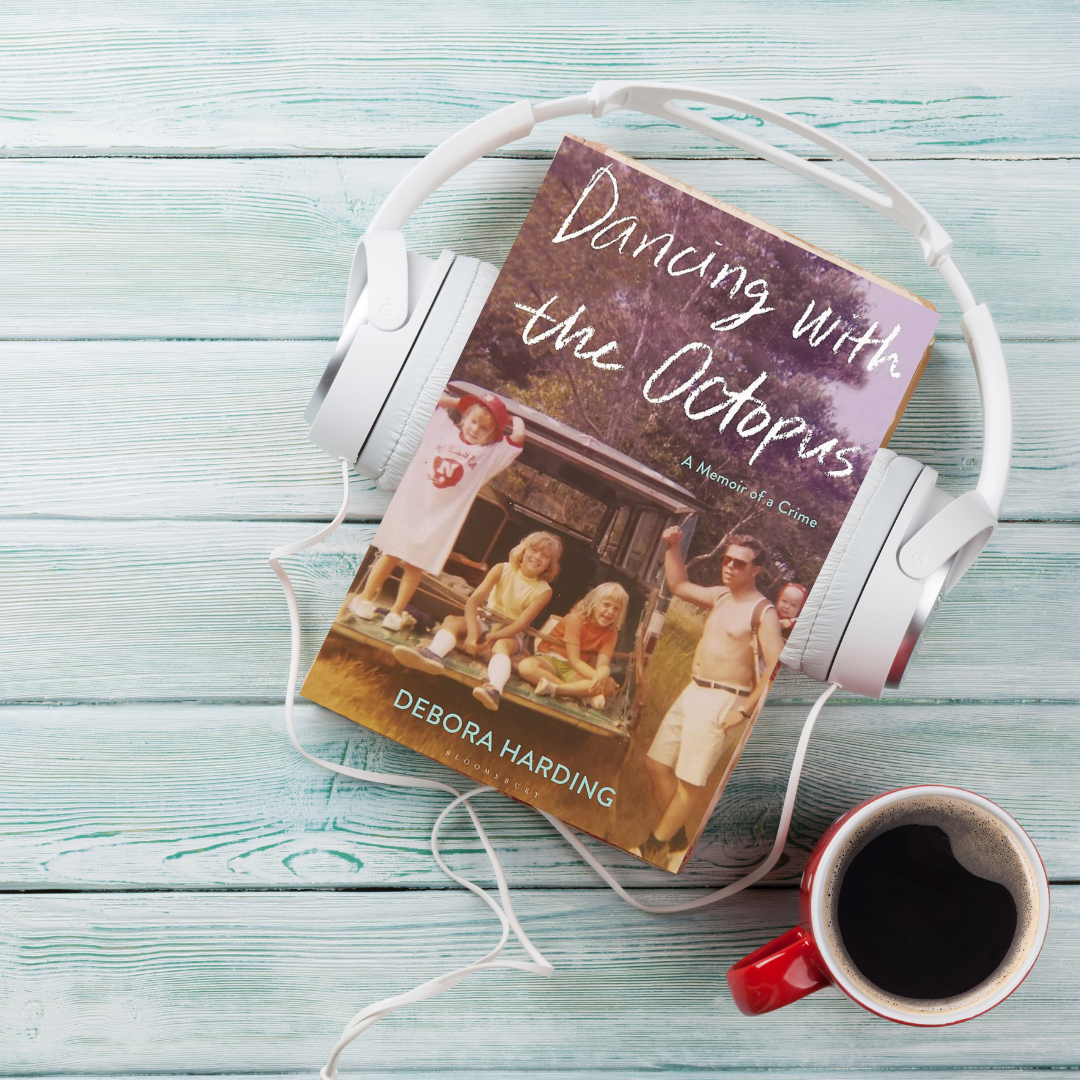
Dancing with the Octopus: A Haunting Story of Survival
Jessica’s Bookshelf – Dancing With The Octopus by Debora Harding Book Review
Great book club book. Lots of different perspectives and feelings!
Title: Dancing with the Octopus
Author: Deborah Harding
Genre: Fiction · True Crime · Memoir · Trauma and Recovery
A Quick Content Note
Dancing with the Octopus contains discussions of kidnapping, sexual assault, childhood abuse, family dysfunction, depression, and post-traumatic stress disorder.
Harding does not avoid the painful details of her experiences, but the book is about much more than the crime itself. It explores the complicated and lasting ways trauma can shape a person, a family, and the stories people tell themselves in order to survive.
A Memoir About More Than One Crime – Dancing with the Octopus book review
In November 1978, fourteen-year-old Debora Harding was abducted at knifepoint from a church parking lot in Omaha, Nebraska. She was sexually assaulted, held for ransom, and left to die during an ice storm.
She survived, escaped, identified her attacker, and returned home.
But returning home did not mean the trauma was over.
Rather than receiving the support and care she needed, Debora returned to a deeply dysfunctional family that seemed determined to move on as quickly as possible. Her father wanted the family to put the experience behind them, while her mother’s reaction eventually caused Debora to question not only her memories, but her own understanding of what had happened.
Decades later, while struggling with the effects of PTSD, Harding began looking more closely at the crime, her family’s response, and the damage caused by years of silence. She eventually met the man who abducted her face-to-face in prison as part of her attempt to understand what happened and reclaim her story.
The result is not a straightforward true-crime memoir.
It is a story about memory, survival, family loyalty, restorative justice, and the strange ways trauma continues reaching into a person’s life long after the immediate danger has passed.
Why Is It Called Dancing with the Octopus?
The title captures the feeling of trying to escape something with multiple arms wrapped around you.
Harding has described the octopus as a metaphor for the many layers of violent trauma and the struggle to avoid being pulled back into its long-term grasp.
There is the trauma of the kidnapping itself.
There is the trauma of the assault.
There is the response of the justice system.
There is the silence that follows.
There is the family’s denial.
There is the complicated relationship between Debora and her parents.
And then there are the questions that surface years later, when the coping mechanisms that once made survival possible no longer work.
Every time Harding seems to loosen the grip of one part of the story, another arm appears.
What I Liked About Dancing with the Octopus
What made this memoir so compelling was its complexity.
Harding does not tell the story from only one emotional position. She moves between her fourteen-year-old self and her adult perspective, allowing us to see how her understanding of the crime and her family changed over time.
She also considers the experiences and motivations of the people around her, including her parents, her sisters, her attacker, and the professionals involved in the justice system.
That does not mean she excuses anyone’s behavior.
Instead, she asks readers to sit with uncomfortable questions.
Can you understand why someone behaved a certain way without forgiving them?
Can empathy and accountability exist together?
What happens when the people who are supposed to protect you contribute to your trauma?
Who gets to decide when a survivor should move on?
And what does healing look like when there is no simple resolution?
I also appreciated Harding’s use of dark humor. There are moments when the humor feels almost startling considering the subject matter, but it gives the reader brief spaces to breathe. It also keeps Debora’s personality present throughout the story. She is never reduced to being only a victim.
The Family Story Behind the True-Crime Story
The kidnapping may be the event that initially draws readers into this memoir, but the family dynamics become equally important.
In some ways, the crime exposes fractures that were already present.
Harding writes about a father she adored, a mother whose behavior was often cruel and destabilizing, and a family that relied on denial as a way of coping. The more she investigates the kidnapping, the more she is forced to reconsider the stories she has told herself about her childhood and the people she loved.
That was one of the most thought-provoking parts of the book for me.
The person who commits the most obvious crime is not necessarily the only person capable of causing lasting harm.
Sometimes the most complicated wounds are created by the people closest to us, especially when love, loyalty, fear, and emotional survival are all tangled together.
What Kept This from Being a Five-Star Read
The structure of Dancing with the Octopus is intentionally fragmented. Harding moves back and forth through time, revisiting events from different perspectives and stages of her life.
That structure reflects the complicated nature of trauma and memory, but it could also feel disorienting.
There were moments when I wanted a clearer timeline or more grounding before moving into another memory, perspective, or piece of the investigation. The emotional intensity also made this a book I sometimes needed to step away from rather than read straight through.
This is not necessarily a criticism of the writing. In many ways, the unsettled structure fits the story.
But it did affect my reading experience and kept it from being a five-star book for me.
Why My Rating Went Up After Book Club – Dancing with the Octopus book review
This is where Dancing with the Octopus really stood out.
After finishing it, I knew it was a powerful story, but I was still sorting through how I felt about some of Harding’s choices, relationships, and conclusions.
Then we discussed it as a group.
Different readers sympathized with different people. Some focused on Debora’s relationship with her mother. Others were struck by her father, her sisters, her attacker, or her decision to pursue restorative justice.
We also had different reactions to the nonlinear structure and to Harding’s willingness to explore the humanity of someone who had caused her unimaginable harm.
The conversation did not produce one clear interpretation of the book.
Instead, it showed how many valid reactions the story could create.
Things that had felt confusing while I was reading began to feel more intentional. Details I had moved past became more important when someone else pointed them out. Even the parts that made me uncomfortable became more interesting once we discussed why they had affected each of us differently.
My rating went up because the conversation revealed more of the book’s depth.
That is one of the best things a book-club selection can do.
Meaningful Quotes from Dancing with the Octopus
“The antidote to anxiety is not logic; the antidote to anxiety is noting it and letting it pass.”
— Debora Harding“I will now tell you about my childhood. Do not be scared.”
— Debora Harding
⭐ Star Rating: Dancing with the Octopus book review
4 out of 5 stars
This was already a four-star read when I finished it, but it became a stronger four stars after our book club discussion.
It is layered, unsettling, brave, and filled with questions that do not have easy answers.
A Few Things to Know Before Reading – Dancing with the Octopus book review
This is not a traditional true-crime book focused primarily on solving a crime or understanding a criminal.
The crime is known. The attacker is identified.
The mystery is what happens afterward.
Harding is trying to understand the emotional aftermath, the choices her family made, the reliability of memory, and what healing might look like decades later.
Readers looking for a fast-paced crime story may find the family history and shifting timeline unexpected. Readers interested in memoirs about trauma, complicated families, restorative justice, and emotional survival will likely find much to discuss.
Because of the subject matter, this may also be a difficult read for anyone sensitive to descriptions of sexual violence, childhood abuse, or parental cruelty.
Would I Recommend Dancing with the Octopus? – Dancing with the Octopus book review
Yes, especially for a book club.
I would recommend it to readers who appreciate complicated memoirs and are comfortable sitting with unresolved questions.
This is not a story that tells you exactly how to feel about every person or every decision. Different readers will bring their own experiences to it, which is precisely what makes the conversation afterward so valuable.
Read it with people who are willing to listen to one another.
You may be surprised by how differently everyone sees the same story.
Final Thoughts: Dancing with the Octopus book review
Dancing with the Octopus is not simply a memoir about surviving a kidnapping.
It is about surviving everything that followed.
It examines what happens when a traumatic experience becomes tangled with family mythology, silence, denial, love, and betrayal. It asks whether understanding the person who harmed you can be part of healing, and whether forgiveness is even necessary in order to move forward.
Harding does not offer a neat ending or a simple lesson.
Instead, she shows that recovery can be complicated, uneven, and deeply personal.
My book club did not agree on every part of this story, and that ended up being one of the things I appreciated most about it.
We came away with different perspectives and different feelings, but also with a deeper understanding of the book and of one another.
And sometimes, that is exactly what makes a great book-club book.
Want More?
✨ Learn more about Dancing with the Octopus and author Debora Harding HERE.
✨ See what else I’ve been reading on Jessica’s Bookshelf.
Have you read Dancing with the Octopus? I would love to know whether your feelings about the book changed after discussing it with someone else.
Sincerely,
Jessica

