

The blog
November 17, 2026
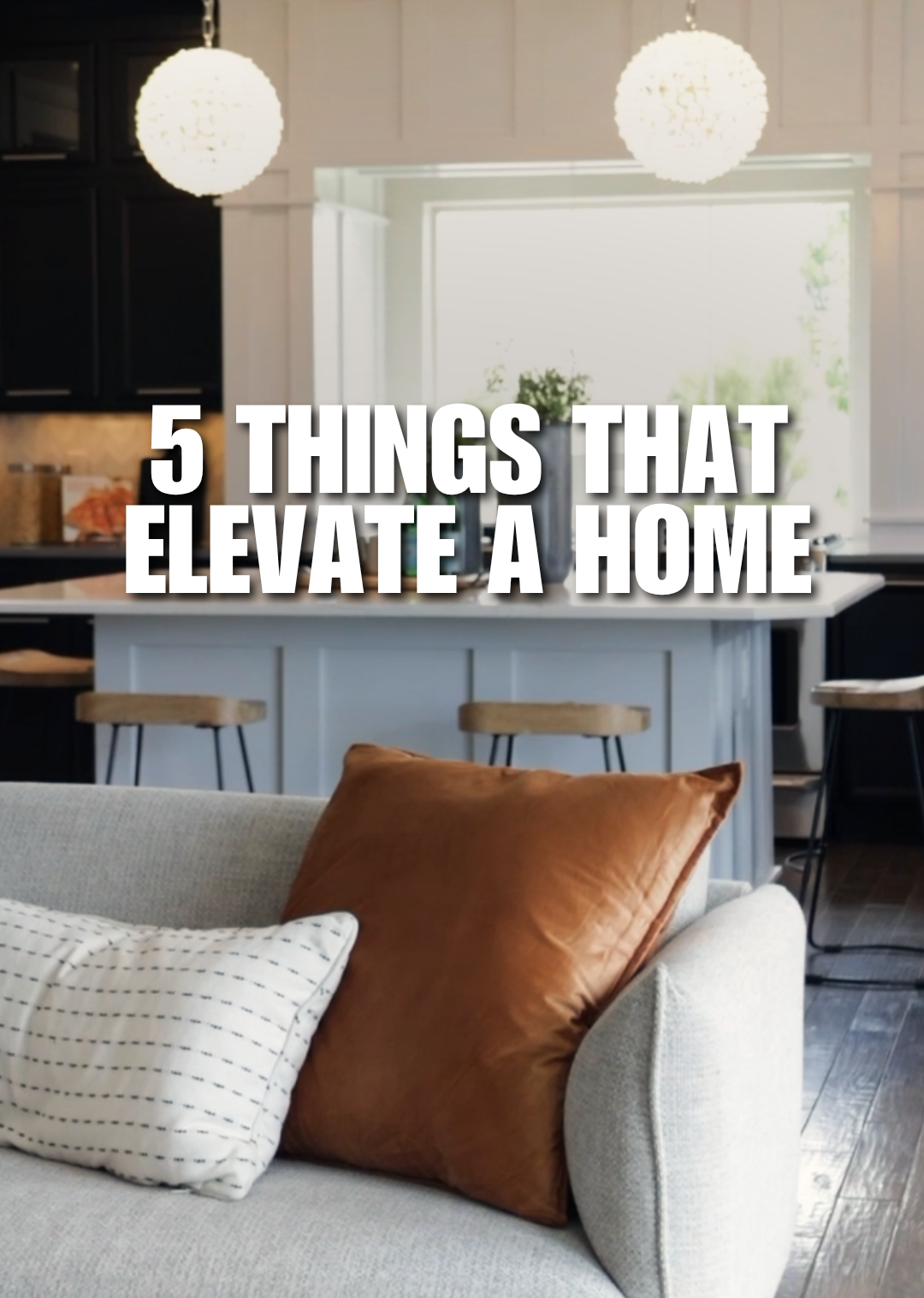
5 Surprisingly Simple Ways to Make a Home Feel Expensive
5 Surprisingly Simple Ways to Make a Home Feel Expensive
Thoughtful lighting, beautiful details, and a little personality can make a bigger difference than you might expect.
Not every beautiful home needs a big renovation.
Sometimes, the smallest details make the biggest difference. Natural light moving through a room, a beautiful chandelier above the dining table, or a thoughtfully styled bookshelf can change how a space feels.
Even the view through a window can become part of what makes a home memorable.
When we walk through homes across Northern Colorado, we notice that the ones that feel especially polished aren’t always the ones with the most expensive finishes.
Often, they’re the homes where someone has paid attention to the details.
If you’re wondering how to make a home feel expensive without spending a fortune, the answer isn’t necessarily more square footage, new countertops, or an entirely different kitchen.
It’s about making thoughtful choices that bring out a home’s character.
Here are five ways to create a more elevated, inviting space without taking on a major renovation.
1. Give Your Home a Sense of Personality
Walk into a beautifully designed home, and you’ll often notice something before you notice the furniture.
The space has personality.
Maybe there’s an interesting piece of artwork above the fireplace. Perhaps a collection of books fills a thoughtfully arranged shelf. Or a beautiful wine display turns an otherwise ordinary corner into something memorable.
These details make a home feel considered rather than simply decorated.
And that’s an important distinction.
If you want to make a home feel expensive, focus on adding personality rather than trying to recreate a furniture showroom. In fact, rooms that feel too coordinated can sometimes lack the character that makes a space interesting.
Choose pieces that tell a story
Instead of filling every available surface with decorations, choose a few things that genuinely mean something to you.
That might include:
- A large piece of artwork that anchors a room.
- A collection displayed on built-in shelving.
- Vintage furniture paired with contemporary finishes.
- Framed photographs arranged in a consistent style.
- Books, ceramics, or objects collected during travels.
The goal isn’t to display everything you own.
It’s to give meaningful pieces enough space to stand out.
For example, a carefully arranged bookshelf can feel more intentional when some shelves hold books, others feature a single decorative object, and a few areas remain open.
That breathing room matters.
Avoid decorating every corner
One common misconception is that a room needs more accessories to look finished.
Often, the opposite is true.
Too many small decorative objects can make a space feel busy, especially when they compete for attention.
Sometimes, the simplest approach is to remove clutter and let a few thoughtfully chosen pieces stand out.
Try removing a few items before buying anything new.
You may discover that the pieces you already love look better when they aren’t surrounded by so much else.
A home with personality doesn’t have to be complicated. It simply needs details that feel like they belong.
2. Upgrade Your Lighting to Make a Home Feel Expensive
Lighting is easy to overlook until you walk into a room where every fixture feels thoughtfully chosen.
A beautiful pendant above a kitchen island, a sculptural chandelier in the entryway, or a pair of wall sconces can give an otherwise simple room a more finished appearance.
And unlike a full renovation, changing a light fixture may be a relatively manageable update.
Think beyond basic overhead lighting
A single ceiling fixture can illuminate a room, but it doesn’t always create much atmosphere.
Instead, think about lighting in layers.
For example, a living room might combine a ceiling fixture with a floor lamp beside a reading chair and a table lamp near the sofa.
Each light serves a purpose while making the room more flexible throughout the day.
In a dining room, a distinctive chandelier can become the visual centerpiece without requiring new furniture or major changes.
Meanwhile, thoughtfully placed sconces can bring interest to a hallway, bathroom, or entry.
Pay attention to the light itself
The fixture is only part of the equation.
Bulb color, brightness, glare, and placement also affect how a room feels.
Warm-white lighting often creates a softer atmosphere in living areas and bedrooms, while kitchens and workspaces may benefit from brighter task lighting.
Consistency is important, too.
When neighboring fixtures have dramatically different color temperatures, a space can feel less cohesive.
Before purchasing a new fixture, consider its scale, ceiling height, and how much light the room actually needs.
A beautiful chandelier that overwhelms a small room may not create the effect you intended.
And remember that hardwired electrical changes should be completed safely by a qualified professional when appropriate.
The right lighting should complement the architecture rather than compete with it.
3. Let Natural Light and Windows Become Part of the Design
Some of the most memorable rooms don’t rely on elaborate decorating.
They simply make the most of what is outside.
A large window overlooking mature trees, a sliding glass door opening onto a patio, or a view of Colorado’s Front Range can give a room a sense of openness that’s difficult to recreate with furniture alone.
In Northern Colorado, natural light can be a particularly appealing design feature.
But you don’t need mountain views or floor-to-ceiling glass to take advantage of it.
Start with what you already have
Before considering new windows, look at how your current ones are presented.
Are heavy curtains blocking daylight?
Is furniture positioned in front of a window?
Do dark window coverings make the room feel smaller than it is?
Sometimes, adjusting these details changes the entire experience of a space.
Consider:
- Hanging curtain rods higher and wider where proportions allow.
- Choosing window treatments that admit daylight while providing the privacy you need.
- Keeping window glass and screens clean.
- Arranging furniture to preserve natural sightlines.
- Using mirrors thoughtfully to reflect existing light.
Even moving a chair away from a window can make a room feel more open.
Make the transition outdoors feel intentional
If a room opens onto a deck or patio, think about how the indoor and outdoor spaces relate.
A clear view through the doorway, coordinated materials, and a comfortable seating arrangement outside can make the transition feel natural.
This doesn’t require building an elaborate outdoor kitchen.
A simple patio with thoughtfully placed furniture and maintained landscaping can complement the interior.
Of course, natural light comes with practical considerations.
Colorado sunshine can create glare and increase indoor heat during certain times of day. Window coverings that manage sunlight may be just as important as the windows themselves.
The goal is to make the most of natural light while keeping the home comfortable.
4. Add Architectural Details That Feel Thoughtful
There’s something about a room with interesting architectural details that makes you want to look a little closer.
Maybe it’s the texture of a wood ceiling.
Perhaps it’s a built-in bookshelf, decorative wall molding, or a beautifully finished staircase.
These architectural details add visual depth and character while complementing the home’s overall design.
Look for opportunities to add character
You don’t necessarily need to change a home’s floor plan to introduce architectural interest.
Depending on the space and budget, possibilities might include:
- Adding simple picture-frame molding to a feature wall.
- Updating dated cabinet hardware.
- Refreshing baseboards or trim.
- Painting built-in shelving for a more cohesive appearance.
- Incorporating wood accents where they complement the existing architecture.
- Replacing worn or inconsistent switch plates and visible hardware.
Individually, these details may seem small.
Together, they can make a room feel more finished.
For example, a plain wall behind a dining table might benefit from subtle molding and a carefully chosen paint color.
Or existing built-in shelves may look completely different after a fresh coat of paint and more thoughtful styling.
Work with the home’s existing style
Not every design feature belongs in every house.
An elaborate traditional molding treatment may feel out of place in a streamlined contemporary interior. Similarly, adding several different wood finishes can make a room feel visually crowded.
Before choosing an upgrade, look at what’s already working.
Consider the home’s ceiling heights, flooring, cabinetry, doors, and overall architectural style.
Then select details that reinforce those elements.
The goal is consistency, not decoration for its own sake.
And if you’re planning a more involved project, such as adding recessed lighting, altering built-ins, or changing structural features, check whether professional work or permits are required.
A thoughtful improvement should look good and function well.
5. Focus on Cohesion Instead of Spending More
Here’s a design principle worth remembering.
Expensive materials don’t automatically create an expensive-looking room.
You can have beautiful furniture, high-quality flooring, and attractive finishes, yet still end up with a space that feels disconnected.
Meanwhile, a room with relatively simple materials can feel polished when the colors, textures, proportions, and furnishings work together.
That sense of cohesion is often what makes the difference.
Choose a consistent direction
Start by looking at the colors and materials that already exist in your home.
Perhaps your floors have warm wood tones, your walls are a soft neutral, and your kitchen features black hardware.
Instead of introducing several competing finishes, consider repeating some of those existing elements in nearby rooms.
This doesn’t mean every space needs to look identical.
A home can have plenty of variety while still feeling connected.
For example, black accents might appear in a kitchen light fixture, a living room picture frame, and the hardware on a nearby cabinet.
The repetition creates a subtle relationship between the spaces.
Pay attention to scale and placement
Furniture placement also matters.
A beautiful sofa can look awkward if it’s too large for the room. A tiny rug beneath a generous seating arrangement can make the furniture feel disconnected.
Before replacing major pieces, experiment with the layout.
Ask yourself:
- Does the furniture allow comfortable movement?
- Is there a clear focal point?
- Are the rugs appropriately sized for the seating areas?
- Do decorative objects complement the room’s proportions?
- Is there enough open space for the design to breathe?
Sometimes, rearranging what you already own is more effective than purchasing something new.
Start with one simple change to make a home feel expensive
If you walk around your home and immediately see ten things you’d like to improve, resist the urge to tackle everything at once.
Choose one space.
Then identify the change most likely to make a noticeable difference.
Start with a simple update that brings more balance and character to the room.
Maybe the dining room needs a better light fixture.
Perhaps the living room would benefit from a larger rug.
Or the entryway simply needs fewer decorative items and one beautiful focal point.
Make that change, live with it for a little while, and see how the space feels.
Good design doesn’t have to happen all at once.
What If You’re Preparing to Sell Your Home?
Making a home feel more polished can be enjoyable when you’re planning to stay for years.
However, if you’re preparing to sell, the priorities may be different.
Personal design choices and improvements that appeal to potential buyers aren’t always the same thing.
For example, a dramatic wallpaper treatment might reflect your personal style beautifully, but it may not be the most practical investment before listing a property.
Instead, focus on presenting the home’s existing strengths.
Before making major improvements, consider speaking with a local real estate professional about which updates may be worthwhile for your property and current market conditions.
The National Association of REALTORS’ 2025 Profile of Home Staging found that 83% of buyers’ agents said staging made it easier for buyers to visualize a property as a future home.
That doesn’t mean every seller needs professional staging or expensive improvements.
It does suggest that presentation deserves attention.
Before spending money on major changes, consider the condition of the home, comparable properties, your budget, and which improvements are likely to be relevant in your local market.
Sometimes, cleaning, decluttering, repairing visible wear, and improving lighting are more appropriate than replacing perfectly functional finishes.
The right preparation plan should be specific to the property.
Make a Home Feel Expensive Without Spending a Fortune

A beautiful home doesn’t need expensive finishes in every room to leave a lasting impression.
Sometimes, it’s the smaller details that make the biggest difference. A thoughtfully chosen light fixture, a window that brings in natural light, or an interesting architectural feature can completely change how a space feels.
Whether you’re updating a home in Erie, Longmont, Boulder, or another community across Northern Colorado, the same idea applies.
If you want to make a home feel expensive, focus on details that complement its character rather than trying to change everything at once.
And remember, good design isn’t just about how a home looks in photographs. It’s about creating a space that feels comfortable, functional, and inviting every day.
Sometimes, one thoughtful change is all it takes to see your home in a new light.
Thinking About Updating Your Home?
At Luginbill Homes, we spend a lot of time looking at homes and noticing the details that influence how a space feels.
If you’re considering updates before selling your Northern Colorado home, we’re happy to help you think through which improvements may be worth exploring and which ones you can probably skip.
And if you’re simply making your current space more enjoyable, we hope these ideas give you a little inspiration for your next project.
Luginbill Homes | Serving Northern Colorado and the Front Range
📞 303-808-1306
Committed to Clients, Rooted in Community.

